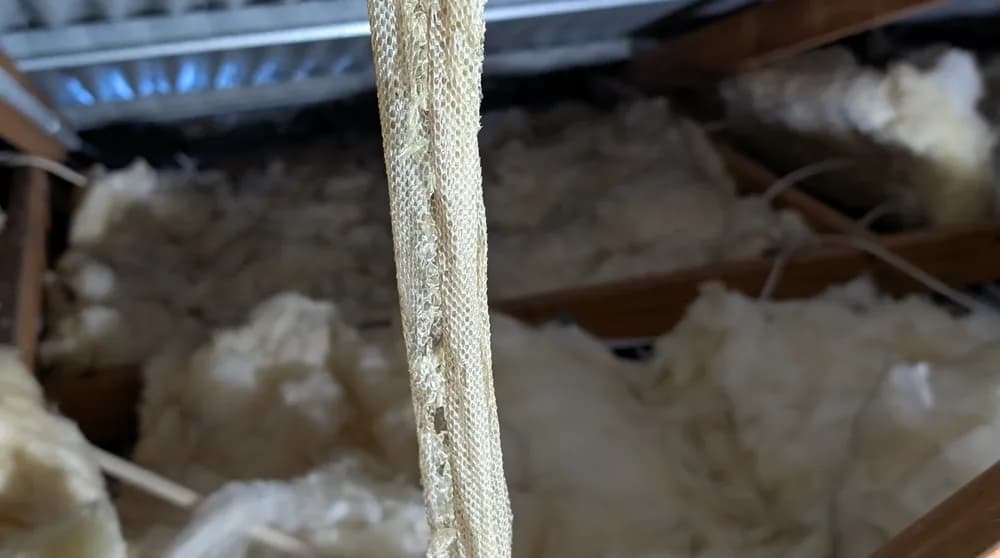
What VIR cabling is
Vulcanised India Rubber was the standard insulation on house wiring for decades before PVC took over. It worked well when new. The problem is that rubber is organic, and organic materials perish.
Decades of heat cycling in a Queensland roof space accelerates that considerably. The insulation hardens, cracks and eventually falls away from the conductor entirely.
Where the green goo comes from
As the rubber breaks down it reacts with the copper conductor and any additives in the insulation, producing a green or blue-green residue that oozes out of the cable. It can run down inside conduit, collect at fittings and appear at switches and power points.
It is a symptom rather than the problem. The problem is that the insulation producing it has stopped insulating.
If green residue appears at a switch or power point, do not keep using that circuit as though nothing has happened. It is a sign the wiring behind it is failing.
Why it matters
- Bare conductors in a roof space are a fire and shock risk.
- Perished cable fails unpredictably rather than gradually.
- It cannot be patched — the whole run is the same age and in the same condition.
- Insurers take a dim view of known, unaddressed wiring faults.
What rewiring involves
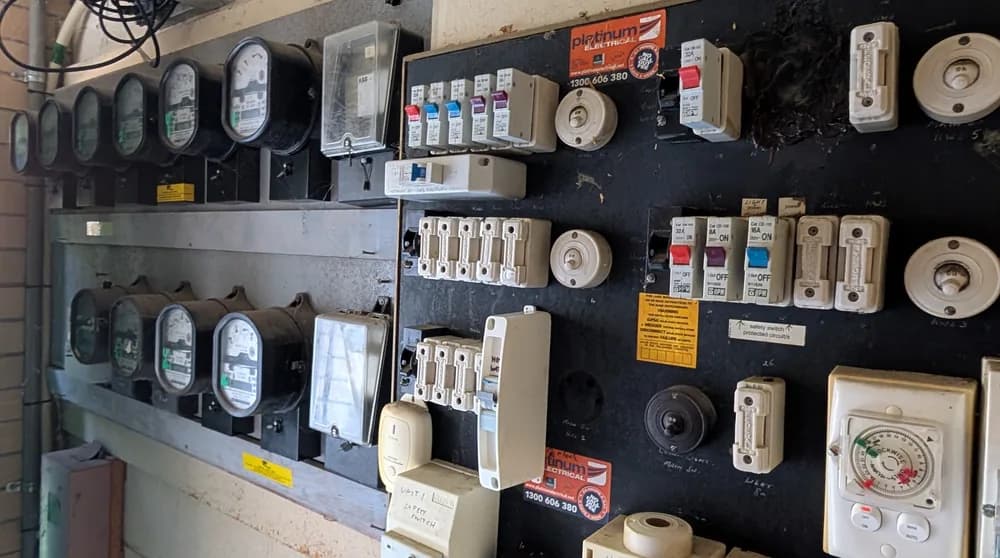
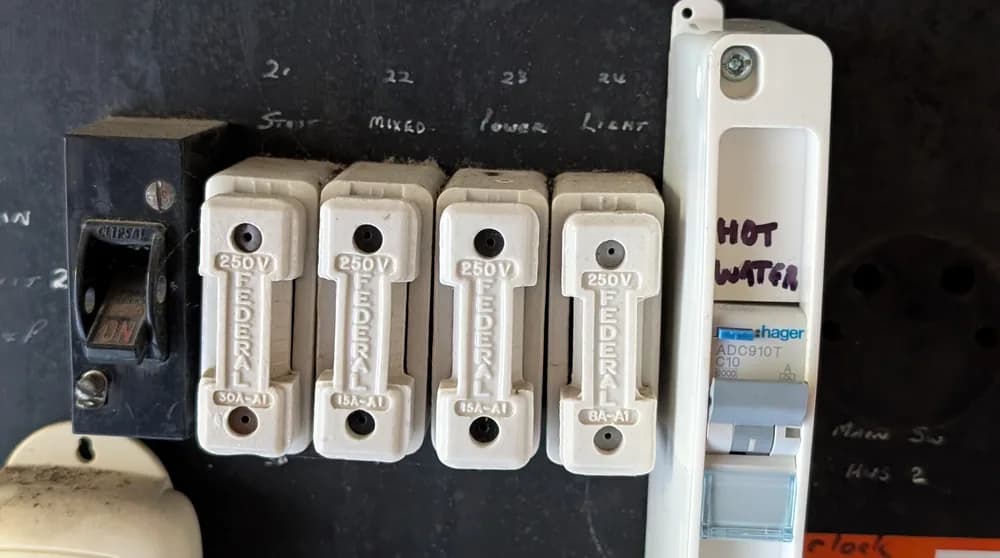
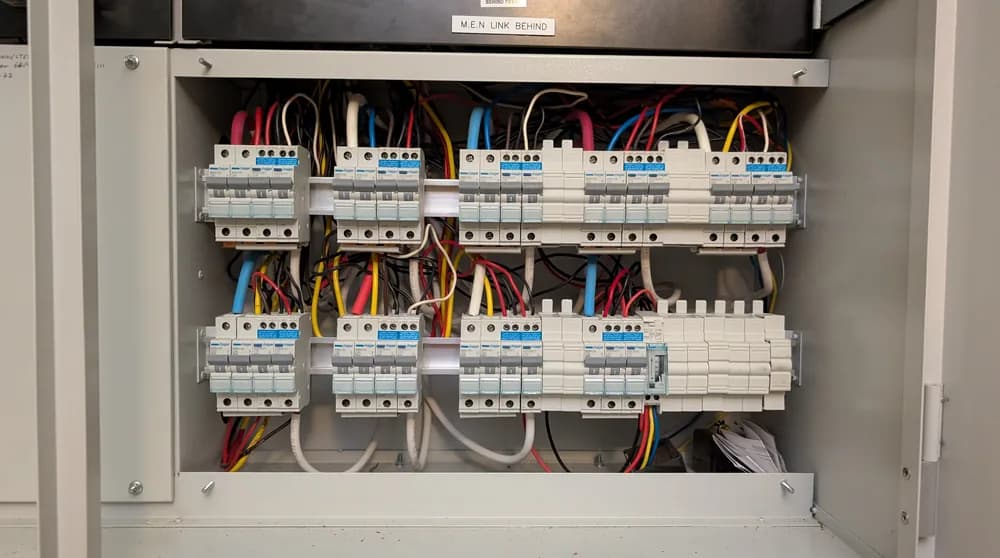
A full rewire replaces the cabling throughout the house, along with the switchboard in most cases, since a board of that vintage will be in the same condition as everything else.
It is the largest electrical job most homes ever have done, and it is disruptive — but it is also the one that resets the entire installation for the next several decades. Where a house is being renovated anyway, doing it at the same time is far less painful than doing it later.
Older Queensland homes
Find out what is above your ceiling.
House rewiring and old cable replacement across Greater Brisbane, quoted fixed before the work starts.