What changes on 1 January 2027
Queensland has been phasing in the same smoke alarm standard since 2017, a stage at a time. New builds and substantially renovated homes came first. Homes being sold or leased followed. The 2027 date is the last stage: it catches every remaining home, whether or not anything is happening to it.
If you own the place you live in and have not sold, leased or renovated it, this is the deadline that applies to you — and it is the first one that has ever applied to you.
What “interconnected” actually means
It means the alarms talk to each other. Smoke in the laundry at 2am sets off the alarm in your bedroom at the other end of the house, at the same volume, at the same moment. A house full of alarms that each only sound for themselves does not meet the requirement, however new they are.
There are two ways to join them up. They can be physically wired together, which is work for a licensed electrician. Or they can be linked wirelessly, where each alarm pairs with the others by radio. A mix of both is allowed, and in an existing home a wireless link is usually far less invasive than pulling new cable through finished walls and ceilings.
Wireless interconnection does not make it a DIY job. The alarms still have to be the right type, in the right places, and — where they are mains powered — connected by someone licensed to do it.
Why photoelectric, and why the standard matters
The law names one detection type: photoelectric. These respond to the visible smoke particles produced by the slow, smouldering fires that start in furniture, bedding and wiring — the ones that fill a house while everyone is asleep.
The alarms also have to comply with Australian Standard AS 3786-2014. That is not a detail you can eyeball from a ladder: it is printed on the alarm body. An alarm that predates the standard does not become compliant by still working.
Where the alarms have to go
Placement is set by the legislation rather than by preference, and it is the part most people get wrong when they count up what they need. The Queensland Fire Department sets out the requirements in full, including bedrooms, hallways connecting bedrooms, and each storey of the home.
Because placement depends on how your particular home is laid out — where the bedrooms sit, how the hallways connect, how many levels there are — we work it out on site rather than quoting a number of alarms over the phone.
Hardwired or 10-year lithium
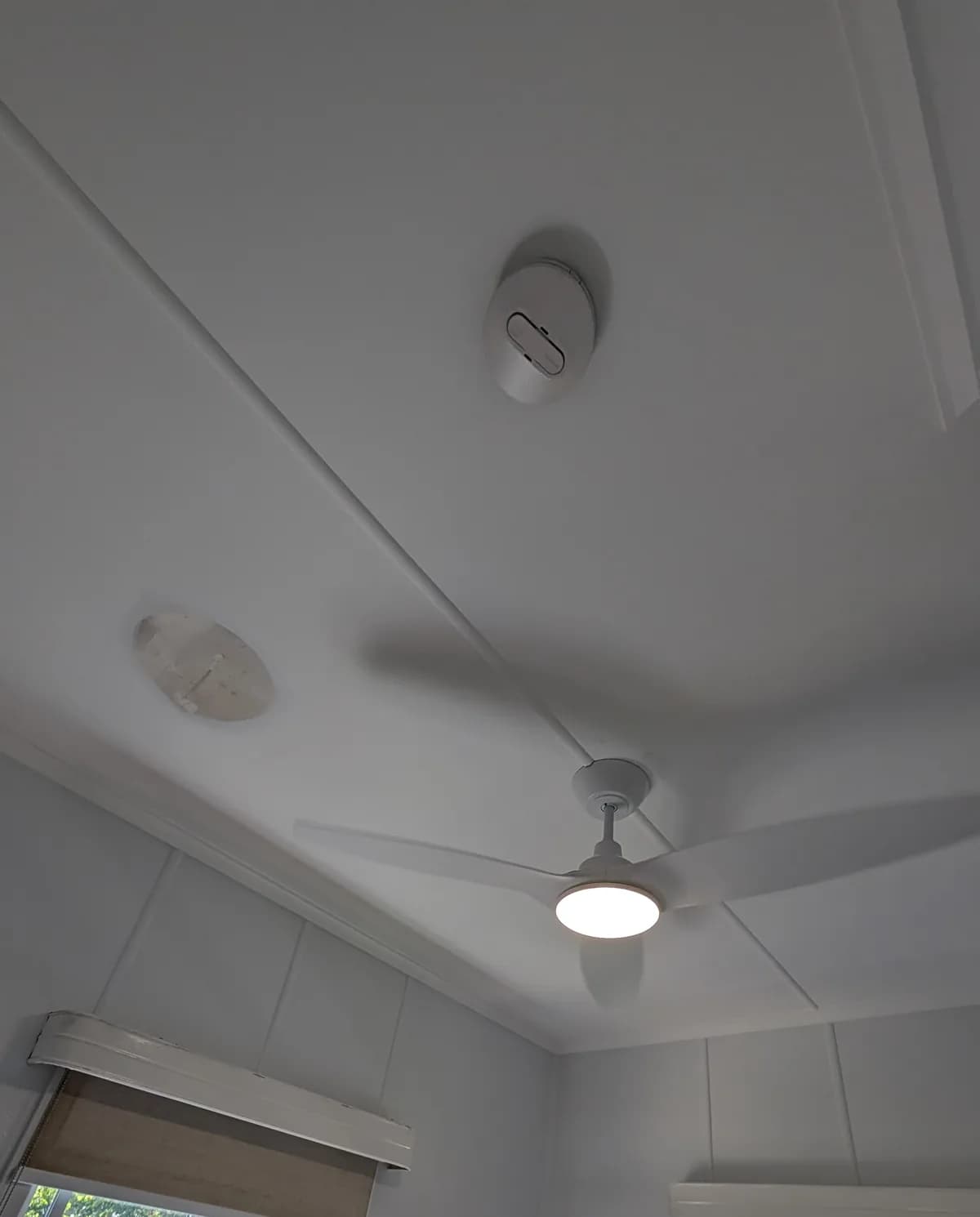
Both can meet the requirement. Hardwired alarms run off the mains with a backup, and suit homes where the cabling already exists or is going in anyway. Sealed 10-year lithium alarms carry a non-removable battery that lasts the life of the alarm, and are usually the practical answer in an existing home.
We fit premium 10-year sealed lithium alarms as standard. We do not install the cheap units that take a replaceable battery every year — they are the ones that end up chirping at 3am and getting pulled out of the ceiling, which is how homes end up unprotected in the first place.
What to do about it
If your alarms are more than a few years old, or you have never counted them against the rules, the honest answer is that you probably need more of them and they probably need to be interconnected. That is the common outcome, not the bad-luck one.
- Check what is printed on your existing alarms — type, standard and expiry date are all on the body.
- Count the bedrooms, the hallways connecting them, and the levels.
- Decide between hardwired and sealed lithium based on what is already in the ceiling.
- Get it done before the deadline rather than in the fortnight before it, when every electrician in Brisbane is booked.
We install, test and certify interconnected photoelectric alarms across Greater Brisbane, and we will tell you plainly what your place needs before any work starts.
Ahead of the deadline
Get your place compliant before 2027.
We install, test and certify interconnected photoelectric alarms across Greater Brisbane, with a fixed price before the work starts.