Your supply comes first
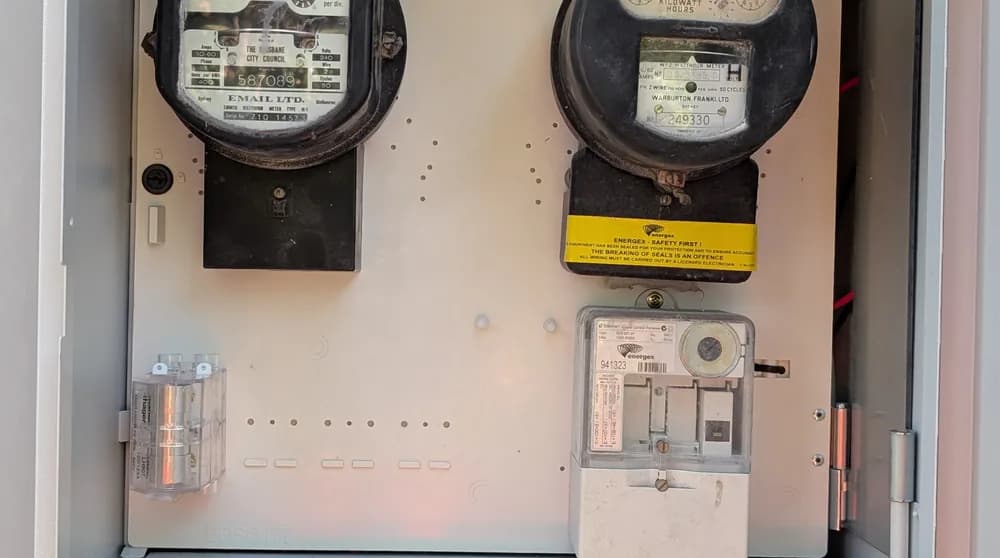
Whether your home is single-phase or three-phase sets the ceiling on charging rate before any equipment decision is made. Most Brisbane homes are single-phase, and a single-phase supply charges perfectly well overnight — it simply charges slower than three-phase.
Upgrading the supply to three-phase is possible but it is a significant piece of work involving the network, not a same-day job. For most households it is not necessary.
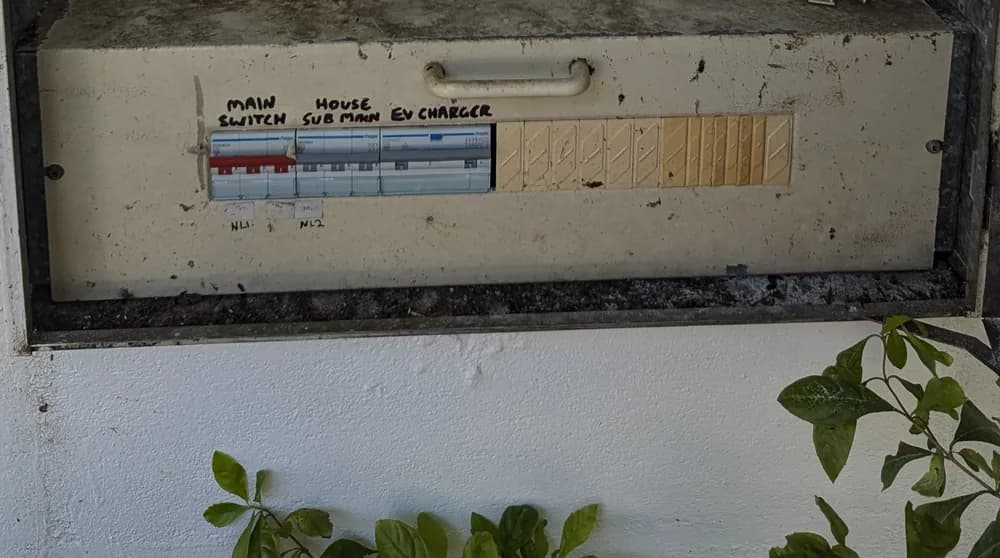
The switchboard
The charger needs its own dedicated circuit with appropriate protection. That means a board with the physical space and the capacity to carry it alongside the rest of the house.
In older homes this is the part that usually needs attention. A board still running ceramic fuses is not a board you add a continuous high-current load to.
We look at the board as part of quoting the charger, because it is the thing most likely to change the scope.
Where it goes
Mount it where the car's charge port ends up, not where the wall is convenient. Getting this wrong means running the cable around or over the car every single night.
- Which side of the car the charge port sits on.
- Which way the car is parked — nose in or reversed.
- Whether the position is sheltered or exposed to weather.
- Whether the cable will reach a second vehicle if you ever swap cars.
What we do
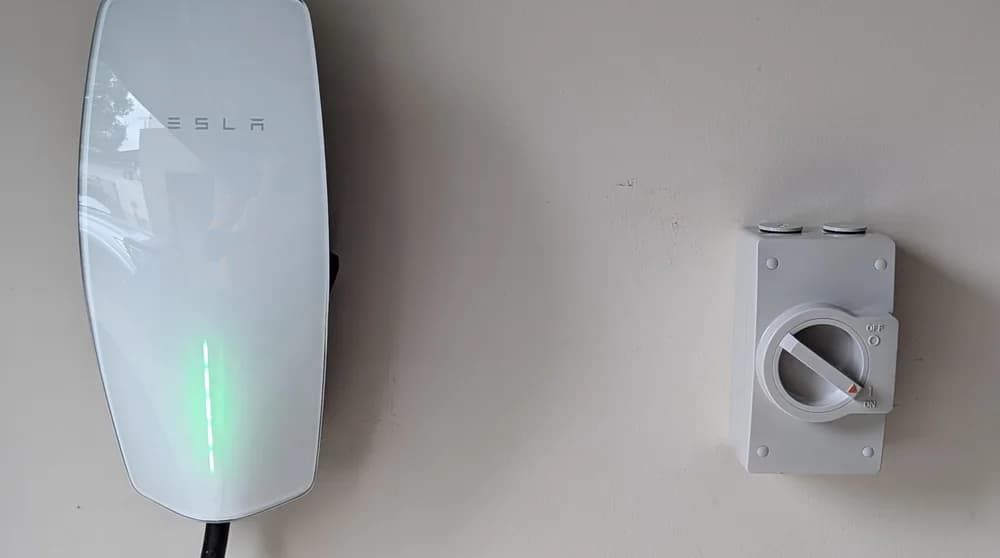
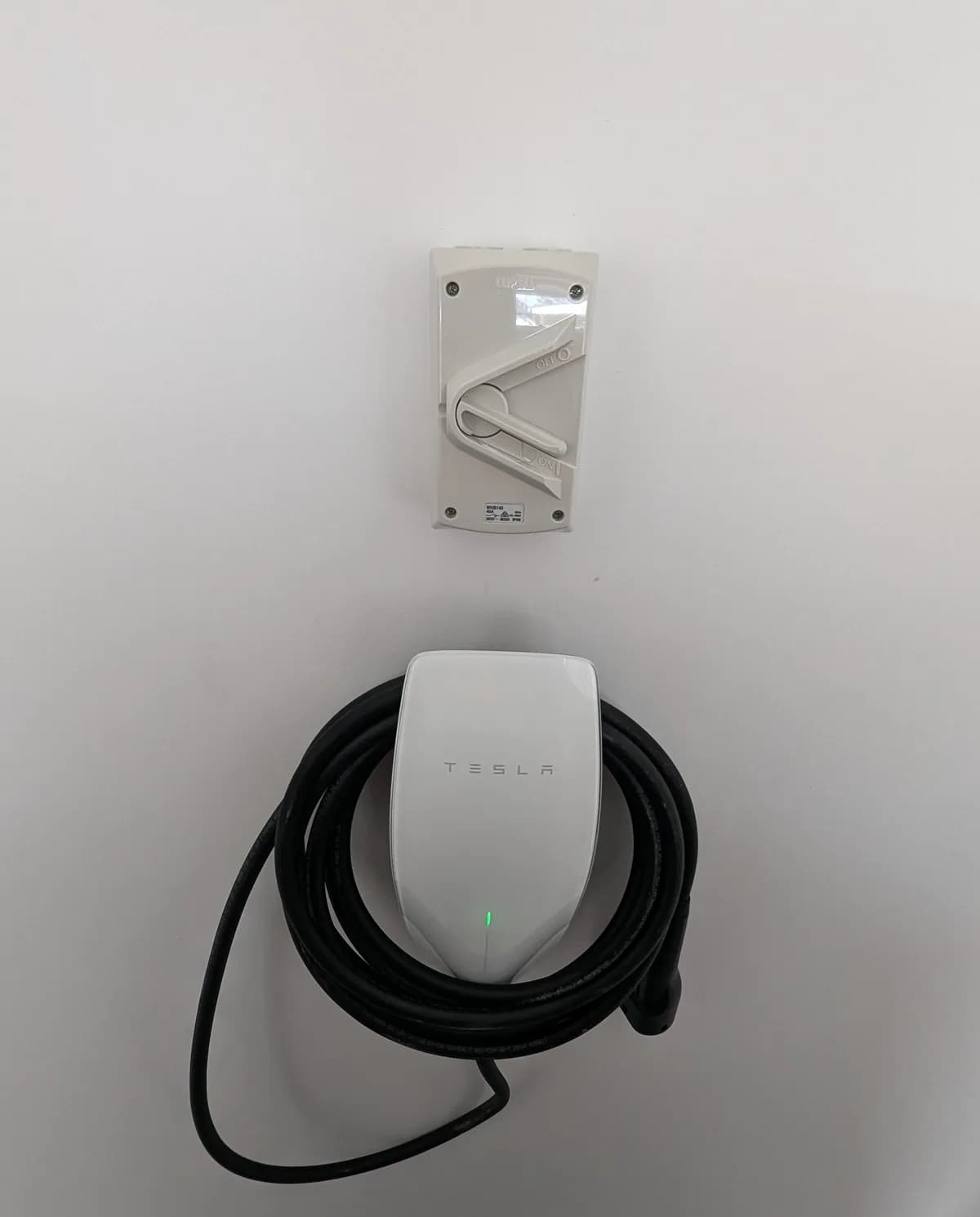
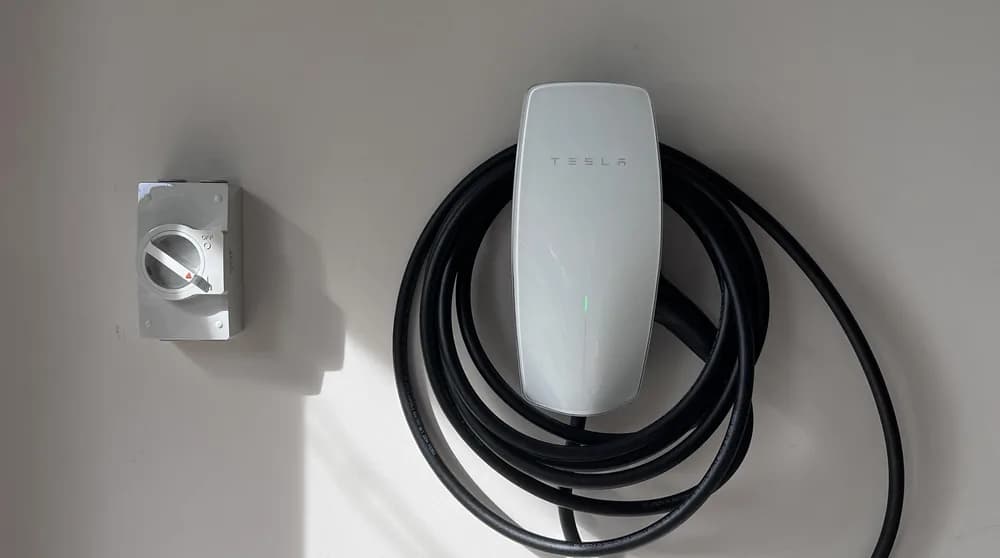
We install wall connectors and other suitable chargers as part of our regular EV work, including the switchboard and circuit work that goes with them. We are electricians who install these units — not a dealer, distributor or manufacturer-appointed installer.
The work is tested and certified like any other electrical installation, and you get the paperwork for it.
Charging at home
Wall connector, installed properly.
EV charger installation across Greater Brisbane, including the switchboard and circuit work it needs.