What each part does
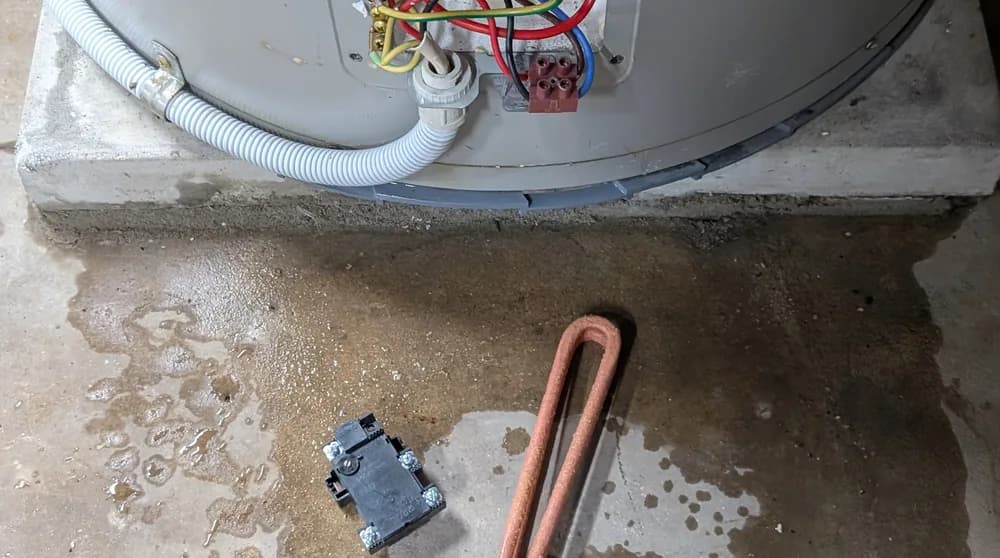
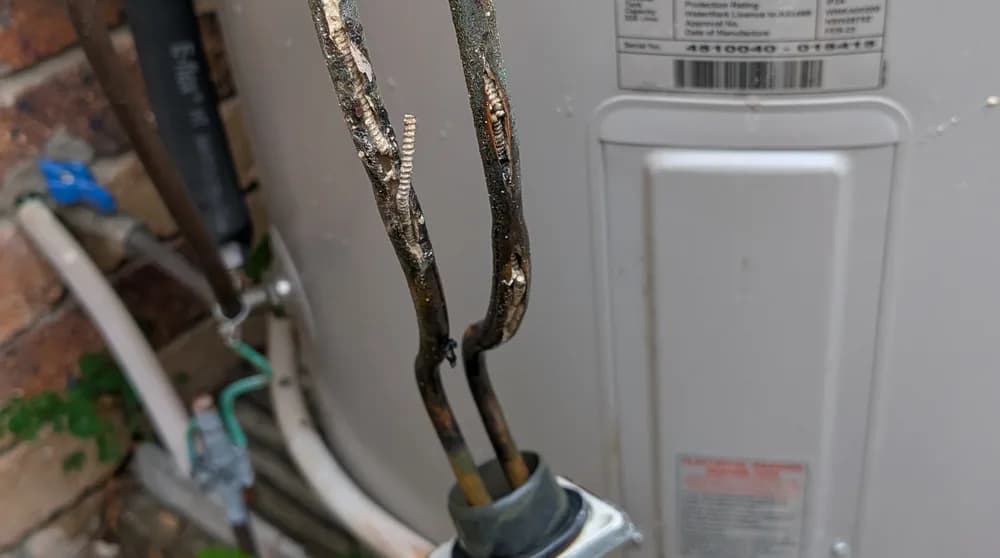
The element heats the water. The thermostat decides when the element runs and cuts it off when the tank reaches temperature. One does the work; the other tells it when to.
Because they sit in the same circuit, a failure in either can look like no hot water — which is why the diagnosis matters more than the symptom.
What the symptoms suggest
- No hot water at all, and the system is dead — often the element, or the supply to it.
- Water heats but never gets properly hot — often the thermostat.
- Water far too hot, or the relief valve discharging — often the thermostat failing to cut off.
- Hot water runs out much faster than it used to — can be either, and on a twin-element system often one element out.
These point in a direction. They are not a diagnosis — the same symptom can come from the circuit, the switchboard, or a tank at the end of its life.
Why it needs an electrician
The element and thermostat sit behind an access plate on a tank full of hot water, connected to a circuit that runs at mains voltage. Testing them properly means isolating the supply, confirming it is dead, and measuring — not guessing from the outside.
It is also the point at which the tank's own condition gets assessed. There is no sense putting a new element into a cylinder that is about to fail.
Repair or replace
An element or thermostat replacement on a sound tank of reasonable age is worth doing. On a tank near the end of its service life, it usually is not — you spend money to buy a short extension and then replace the lot anyway.
We will tell you which situation you are in before doing the work rather than after.
No hot water?
Get it diagnosed properly.
Electric hot water fault finding, element and thermostat replacement across Greater Brisbane.