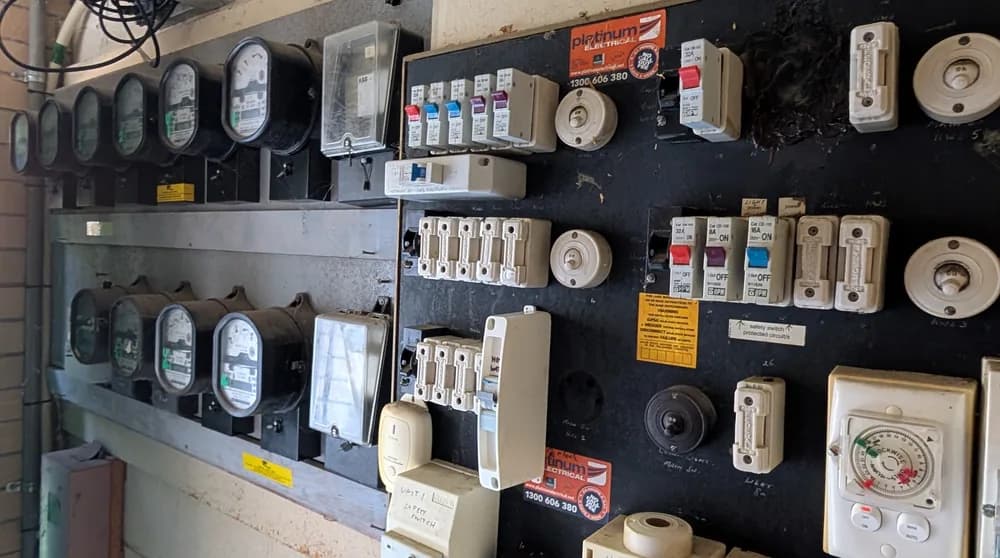
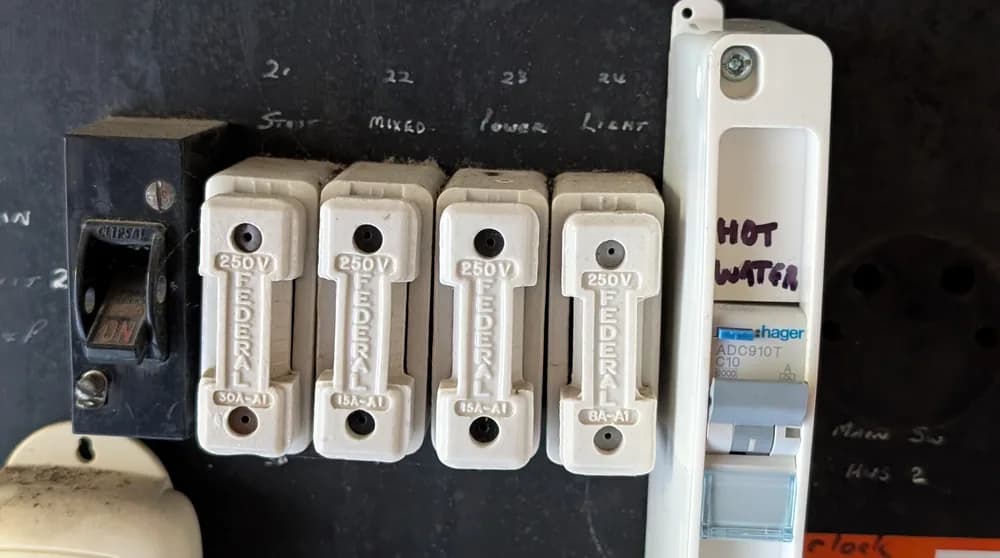
Ceramic fuses
A rewirable fuse is a piece of wire designed to melt when too much current flows. It protects the cable in your walls from overheating, and it does that job adequately.
What it does not do is notice electricity going somewhere it should not — through an appliance casing, through water, or through a person. It also has to be rewired by hand after it blows, and the wrong gauge of wire quietly removes the protection entirely.
Circuit breakers
A circuit breaker does the same job as a fuse, more conveniently and more consistently — it trips and is reset with a switch rather than rewired. Still overload protection, still nothing about current going astray.
A board full of circuit breakers is more modern than one full of ceramic fuses, but it may still have no personal protection at all.
Safety switches (RCDs)
A safety switch watches for current leaving the circuit by a path it should not take, and cuts power in a fraction of a second when it does. That is the device that protects people rather than cable.
Older installations often have one safety switch covering many circuits. It works, but when it trips it takes everything with it, and finding which appliance caused it becomes a process of elimination in the dark.
RCBOs: both jobs, one circuit
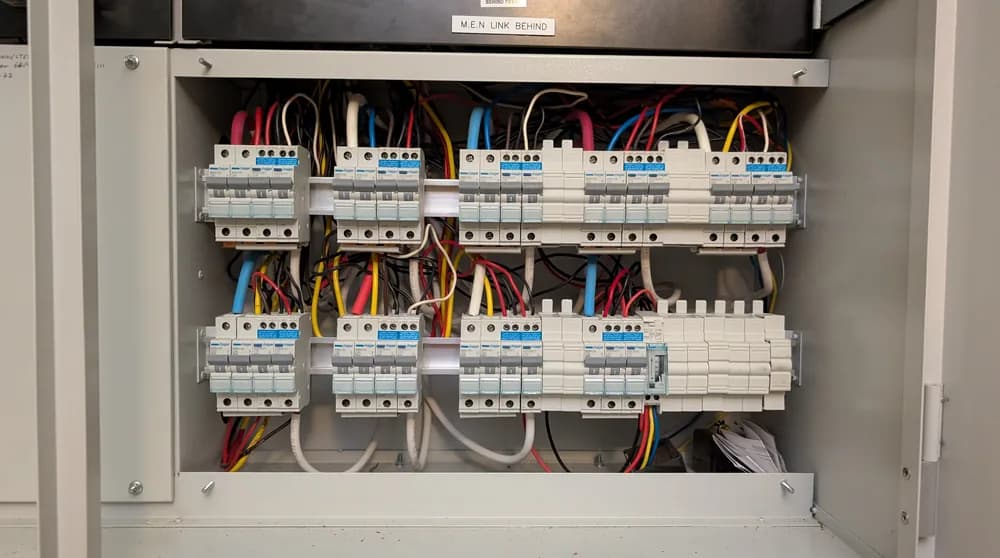
An RCBO combines both functions in a single device dedicated to one circuit. It protects the cable from overload and the person from a fault, and it only ever cuts the circuit that has the problem.
RCBOs on every final sub-circuit is the gold standard. One device per circuit, each protecting both the cable and the person using it — that is what a board built to best practice looks like, and it is what we fit on an upgrade.
- Overload protection and personal protection in one device.
- One per circuit, so a fault does not black out the house.
- Makes finding the faulty appliance obvious rather than a guessing game.
- The current standard for how boards get built.
Gold standard is not the same as legal minimum. The wiring rules call for safety-switch protection on certain circuits rather than an RCBO on every one, so a board can be compliant and still be a long way short of this. Going to one per final sub-circuit is a deliberate choice about how well the place is protected, not a box being ticked.
This is what we fit when we upgrade a board, and it is the practical reason an upgrade is worth doing beyond simply having room for another circuit.
Protection that works
Bring the board up to standard.
Safety switch and RCBO upgrades across Greater Brisbane, quoted fixed before the work starts.