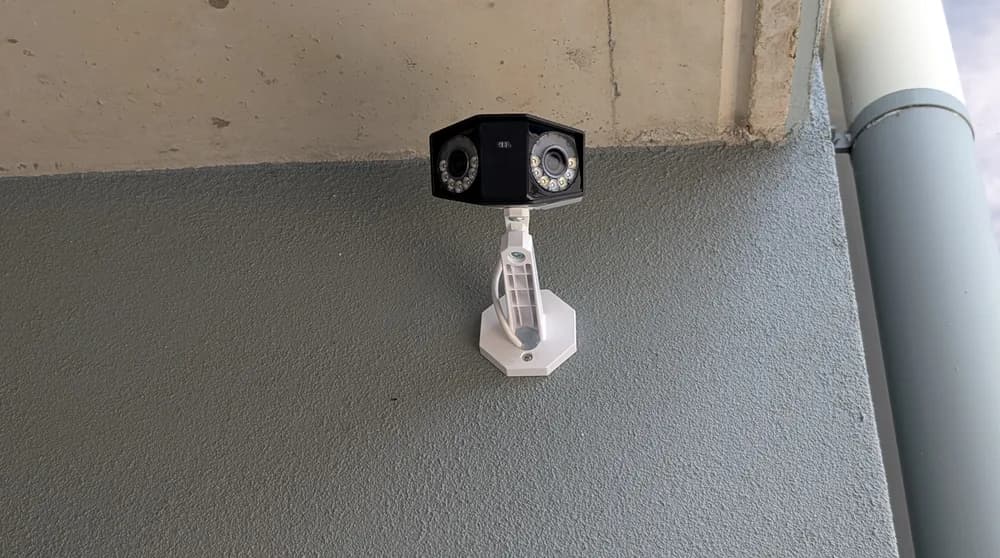
What PoE actually means
Power over Ethernet sends both power and data down a single Cat6 cable. One cable to each camera, no power point needed at the camera position, and no batteries to charge.
That is the practical advantage over wireless cameras: nothing to recharge, nothing dropping off the Wi-Fi, and footage that keeps recording when the internet does not.
- One cable per camera carrying power and data.
- No power point required at each camera position.
- Not dependent on Wi-Fi coverage at the far corners of the property.
- Consistent quality, because the footage is not being squeezed through a wireless link.
Where the footage lives
An NVR — network video recorder — is the box the cameras record to. It sits inside, usually near the data cabinet or wherever the cabling terminates, and holds the footage locally.
Local recording matters. A cloud-only camera stops being useful the moment the internet drops, and monthly subscriptions for footage storage add up over the life of a system.
Dome, turret and where they go
Dome cameras sit flush under an eave and are discreet. Turret cameras are easier to aim precisely and avoid the internal reflection problem domes can suffer at night when the infrared bounces inside the housing.
Position does more for footage quality than resolution does. A camera covering an approach at head height gives you a usable face; the same camera mounted high covering a whole yard gives you the top of someone's head.
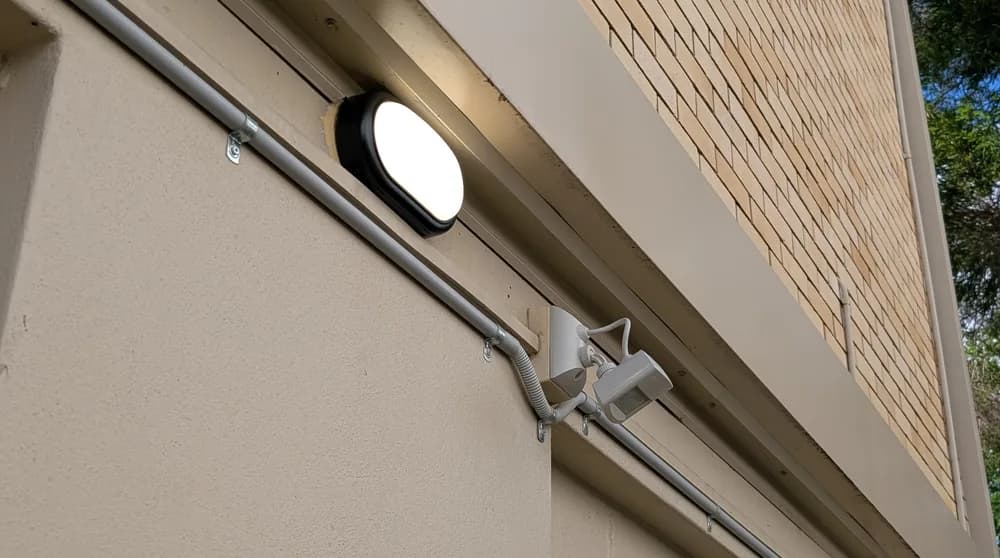
Lighting and cameras work together. A camera pointed into glare sees less than one lit evenly — worth thinking about alongside any outdoor lighting.
The cabling is the system
Cameras get replaced every several years as the technology moves. Cat6 run properly through the walls and roof space outlasts several generations of camera.
Which is why the cabling is the part worth doing properly: terminated at a patch panel, labelled, and run so that a future upgrade is a matter of unclipping one camera and clipping on the next.
Cameras and cabling
A system you will actually check.
PoE camera systems, NVRs and Cat6 cabling across Greater Brisbane.